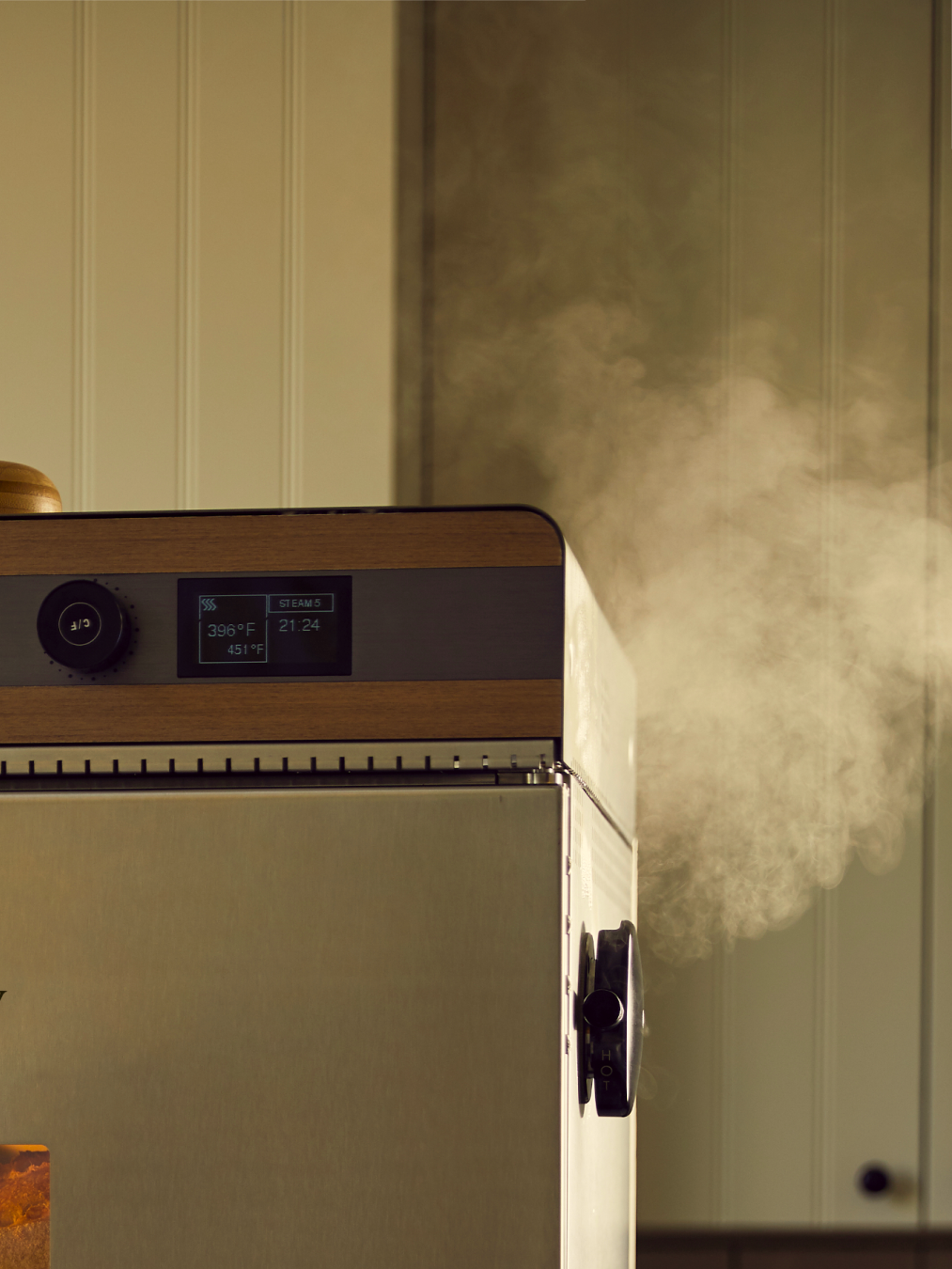
Steam does a tremendous amount of work in the first moments of a crusty artisan bake. It determines how your loaf opens, how long the surface stays elastic, and how the crust develops shine and texture. The Simply Bread Oven uses a built in, gravity fed steam system that gives you full control over how you use steam in the oven.
Steam keeps the dough surface flexible long enough for the loaf to fully expand before the crust sets. This elasticity allows scores to open cleanly. Starches on the surface gelatinize in the presence of steam, which creates shine and supports blister formation.
Once the crust sets, steam no longer contributes. Dry heat takes over and builds color for the rest of the bake. That early window decides bloom, structure, and final appearance, which is why steam production and timing matter.
The reservoir on top of the oven holds 13 oz of water. When you press the steam button, water travels down a tube along the back of the oven and lands in a metal trough behind the bottom stone. Because the metal is extremely hot during a bake, the water flashes instantly into vapor and fills the chamber from the bottom up.
You control how much water enters the trough by selecting a steam duration of 1 to 5 seconds. This adjusts how long the valve stays open, not a fixed volume of water. The ideal steam duration depends on flour strength, dough mass, hydration, climate, altitude as well as many other contributing factors. All of these influence how much external steam the dough needs at the start of the bake. Adjust until you find the setting that consistently supports your formulas in your environment.
Water in the oven behaves just like your breath: on a cold morning you see it because it condenses; on a warm day it stays invisible even though the moisture is still there. The oven is hot enough that nothing condenses, so the steam remains invisible even while it is fully active.
You will not physically see steam inside the Simply Bread Oven. The chamber is sealed, the stones are hot, and the internal air is already holding as much heat as it can. When water flashes into vapor, humidity rises instantly, but the temperature difference is not large enough for condensation to form.
You may see visible condensation coming out of the bottom sides of your oven. The Simply Bread Oven is designed to hold in the necessary moisture but let out any excess otherwise it would turn into a giant pressure cooker.
Steam is needed only in the first 15 to 20 minutes of a lean dough bake. This is where bloom, shine, and crust structure develop. After that window, dry heat completes the loaf.
If you plan to steam more than once, the trough must be fully reheated before more water enters. When the metal is hot enough, water vaporizes instantly. When it has not recovered, water can sit and simmer instead of flashing, which creates weak steam and may pool enough to leak. Give the trough at least five minutes to reheat between bursts.
Dough also releases moisture during the bake. Hydration, dough mass, and formula all influence how much internal steam the dough contributes. Keep this in mind when deciding how much additional steam to add.
If you ever see water leaking after steaming, the duration was likely too high or the trough had not fully reheated. Shorten the duration or increase recovery time and the issue resolves.
Crusty artisan doughs are the only bakes that need added steam. Enriched doughs like rolls, buns, and sandwich loaves do not. Ingredients such as sugar, butter, milk, and eggs change how the crust forms, and added steam can create a firmer crust than intended.
The Simply Bread Oven already retains moisture early in the bake. You can experiment with keeping the vent lever closed to trap dough moisture or opening it early to release humidity. Small adjustments make a noticeable difference in texture.
Steam is one part of the oven’s overall system. The stones store energy, the coils feed it, and the dough draws from it as it rises. Steam creates the right conditions for that rise by keeping the exterior workable long enough for the loaf to reach its full potential.
With experience, you’ll see how steam affects bloom, shine, and crust development. Those observations help you shape a steam routine that fits your dough and your environment. Steam is simply another tool and it becomes easier to use well the more you watch your results.


.png)


.webp)
.webp)
