From Countertop to Community: Navigating Cottage Food Laws Across the U.S.
/
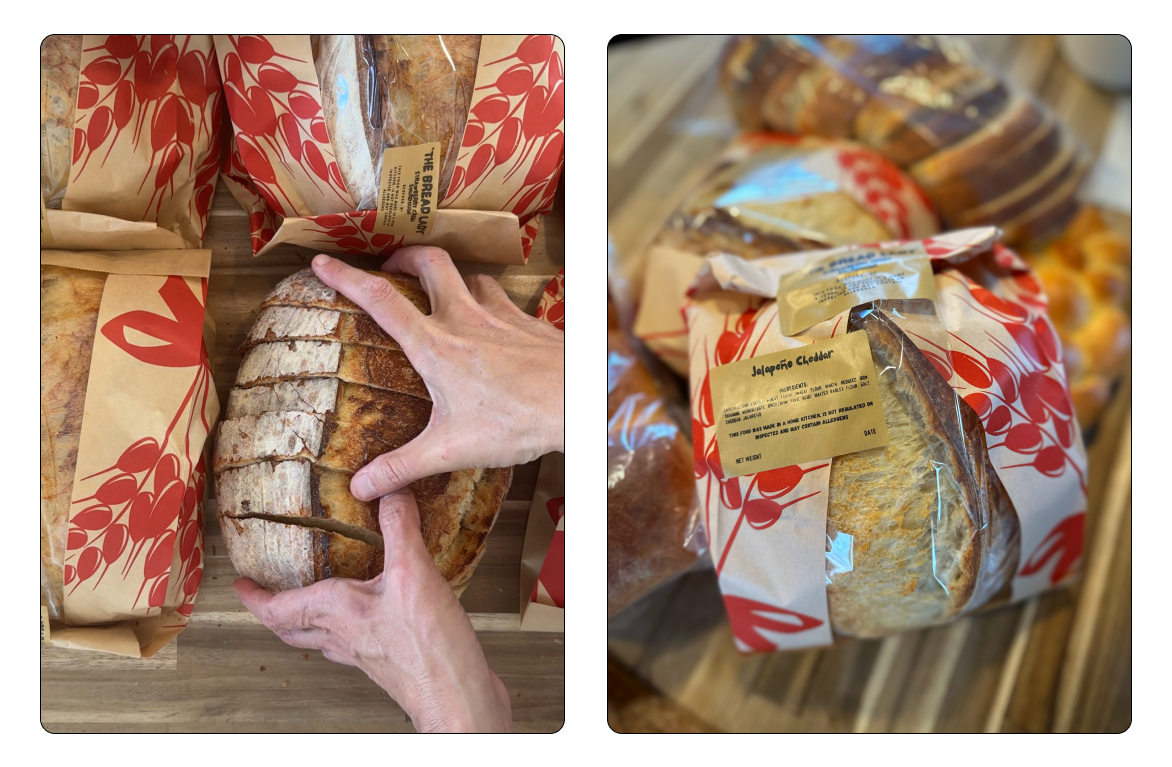
Meet Simply Bread Co customer Kevin Grenz (@MeloBread)
From Countertop to Community: Navigating Cottage Food Laws Across the U.S.
By: Alisha Fuller
So, you've mastered the sourdough crumb, and your neighbors are practically banging down your door for a loaf. You're ready to turn your passion into a business with a Simply Bread Oven. But before you sell that first crusty baguette, there's one hurdle every micro-baker must clear: the Cottage Food Law.
Cottage food laws allow entrepreneurs to use their home kitchens to bake and sell "non-potentially hazardous" foods (like bread!) without the massive overhead of a commercial space. However, while the goal is the same nationwide, the rules vary wildly from state to state.
The "Golden Rules" of Cottage Food
Cottage food laws differ from state to state, but many follow similar regulatory patterns built around food safety, consumer transparency, and production accountability. While the details, restrictions, and allowances shift depending on where you live, there are a handful of general practices that tend to show up across most cottage frameworks. Understanding these baseline expectations helps set the stage before you begin digging into your specific state's rules.
Labeling — Most cottage producers are required to label their products clearly and transparently. This often includes the producer's name and address, a full ingredient list in descending weight order, allergen disclosures, and a statement noting the food was made in a home kitchen not subject to inspection. Exact wording and formatting requirements vary by state, so reviewing your local guidelines is essential.
Shelf-Stable Food Classification — In many traditional cottage states, allowable products are limited to foods that can be safely stored and sold at room temperature. For micro-bakers, this commonly includes breads, rolls, cookies, brownies, muffins, and similar baked goods. Items that rely on refrigeration for safety, such as cream fillings, custards, cheesecakes, or meat inclusions, are frequently regulated differently or fall outside standard cottage eligibility.
Sales Structure — Cottage sales are often structured around direct transactions between the producer and the customer. Farmers markets, porch pickups, community events, and local deliveries are common sales avenues. Some states offer expanded pathways that allow indirect sales through retail shops or cafés, though this typically requires additional permitting or licensing.
Sanitation and Hygiene Practices — Cleanliness and safe food handling are foundational expectations in most cottage frameworks. This can include maintaining a sanitary workspace, managing pets and household activity during production, practicing proper handwashing, and following basic food safety protocols. In states that require inspections or training, these practices are often evaluated more formally.
State-by-State Nuances: Where Do You Fit In?
Not every state approaches cottage food the same way. Some have actively passed legislation to protect and expand your right to sell homemade food. Others are simply less restrictive by default. And some require meaningful steps before you can legally sell your first loaf. Knowing which category your state falls into tells you not just what paperwork you need, but how protected and how scalable your business actually is.
The "Open Door" (Food Freedom) States — A Food Freedom act is specific legislation that affirmatively protects a resident's right to produce and sell homemade food directly to consumers with minimal government interference. These are states that have passed a law establishing that protection. In Food Freedom states there is no permit to apply for, no training certificate to earn, and no inspector coming to your kitchen before you can sell. Most of these states limit sales to in-state consumers only. North Dakota and Arkansas are notable exceptions — both permit sales across state lines.
Wyoming, Montana, North Dakota, Utah, Arkansas, and Oklahoma
States With No License or Permit Requirement — Not every permissive state has passed a Food Freedom act. Some states simply have not imposed a registration or licensing requirement, which in practice means you can start selling without going through any state approval process. The distinction matters because a Food Freedom act is an active legal protection — it is harder to take away. The absence of a requirement is not the same thing. That said, for a baker starting out today, the practical reality in these states is the same: no application, no approval process, no waiting. Every one of these states still requires proper labeling, and most have a sales cap that determines how much you can earn before you need to move into a more formal licensing structure.
Ohio, Mississippi, Maryland, Michigan, Virginia, Louisiana, Florida, Tennessee, Idaho, Iowa, Missouri, South Carolina, South Dakota, and West Virginia
The "Training Required" States — Some states require you to complete a food safety course before you can legally sell anything. This is a legal requirement, and in most cases it means earning an ANSI-accredited Food Handler's certification before you make a single sale. Most of these courses are available online, take about two hours, and cost under $15. How that requirement is enforced varies: in Alabama your certificate is reviewed by the county health department alongside your product labels before you are cleared to sell, in Arizona it must be completed before you can finish your state registration, in Georgia it is required even though no license or inspection exists, and in Indiana a food handler certificate has been required since July 2022 with no other permit needed. Illinois stands apart from the rest of this list: it requires a full Certified Food Protection Manager (CFPM) certification, not a basic handler card. The CFPM involves an 8-hour course and a proctored exam, costs $100–$200, and must be renewed every five years, a meaningfully higher bar than the other states here. If your state is on this list, the certification is your first step. Everything else comes after.
Alabama, Arizona, California, Connecticut, Georgia, Hawaii, Illinois, Indiana, New Mexico, Rhode Island, Washington, Massachusetts, DC, and Vermont
The "Mandatory Inspection" States — In most states, your home kitchen is yours. No inspector will ever knock on your door, and nothing about your physical workspace needs to be approved before you start selling. But in some states a home kitchen inspection is a required step before you can legally sell. California requires an inspection only if you pursue a Class B permit, which is the tier that allows indirect sales to stores and restaurants. In every case the inspection is focused on basic sanitation — a clean workspace, proper food storage, no evidence of pests. It is not a commercial kitchen standard.
Connecticut, Rhode Island, Washington, Massachusetts, and Maine (though many localities in Maine have chosen to waive this requirement)
California is the only state that operates a formal two-tier system. Class A is a registration with no inspection, limited to direct sales, with a current cap of approximately $86,000 per year. Class B requires a home kitchen inspection and opens the door to indirect sales through stores and restaurants, with a current cap of approximately $172,000 per year. Both caps are inflation-indexed and increase annually. Always verify current figures with your county health department.
Essential Tips for the Aspiring Micro-Baker
Starting a cottage food business comes with a learning curve, but most of the friction points are predictable. A little preparation across four areas goes a long way.
Kitchen Setup — Most states expect your production space to be clean, organized, and free of pets and children during active baking. Some states go further and require equipment segregation, meaning the tools you use for your business cannot be used interchangeably with personal cooking. Check your state's specific requirements before you start, because this is one of the first things an inspector will look at if your state requires a pre-sale kitchen review.
Sales — Know your channel before you sell. Most cottage laws are built around direct transactions, meaning you hand the product to the person buying it. Selling to restaurants, cafés, or grocery stores is a different legal category in most states and often requires a higher tier permit or commercial licensing. The Simply Bread App can help you manage direct orders and porch pickups cleanly and legally within those boundaries.
Labeling — Allergen disclosure is not optional. Wheat, nuts, eggs, and other major allergens must be clearly listed on every product you sell. Equally important is what you cannot say — health claims like "this bread supports gut health" or any language suggesting your product treats or prevents a condition can trigger FDA oversight, even for a home kitchen operation.
Scaling — Your state's sales cap is not a suggestion. Once you hit that threshold, you are legally required to transition into a licensed commercial operation. The Simply Bread Oven's NSF and UL certifications make that transition smoother, because many commercial kitchen approvals and co-packing facilities recognize those certifications as a baseline standard.
Ready to Rise?
Navigating cottage food law can feel overwhelming at first, but these regulations exist to make starting possible. Most states genuinely want to see local food entrepreneurs succeed, and the framework they've built reflects that.
If you are in a Food Freedom state, your path is wide open. If you are in a state that requires training or inspection, those steps are manageable and usually faster than people expect. Wherever you are, the first move is always the same: confirm what your state requires, get your labeling right, and start selling.
Your local Small Business Development Center or University Extension office can provide free state-specific guidance if you need it. And when you're ready to look at production capacity, check out how the Simply Bread Oven fits into a home kitchen setup here.
Cottage food laws change frequently. Always confirm current requirements directly with your state's Department of Agriculture or Health Department before starting your business.
Join the Simply Bread Community
Read about unique artisan bakers’ stories and latest recipes, and connect with the baking community. We will even notify you about our exclusive promotions, new product releases, oven software updates, and more.


.png)


.webp)
.webp)
